Composting 101: Turn Kitchen Scraps Into Garden Gold
October 10, 2026
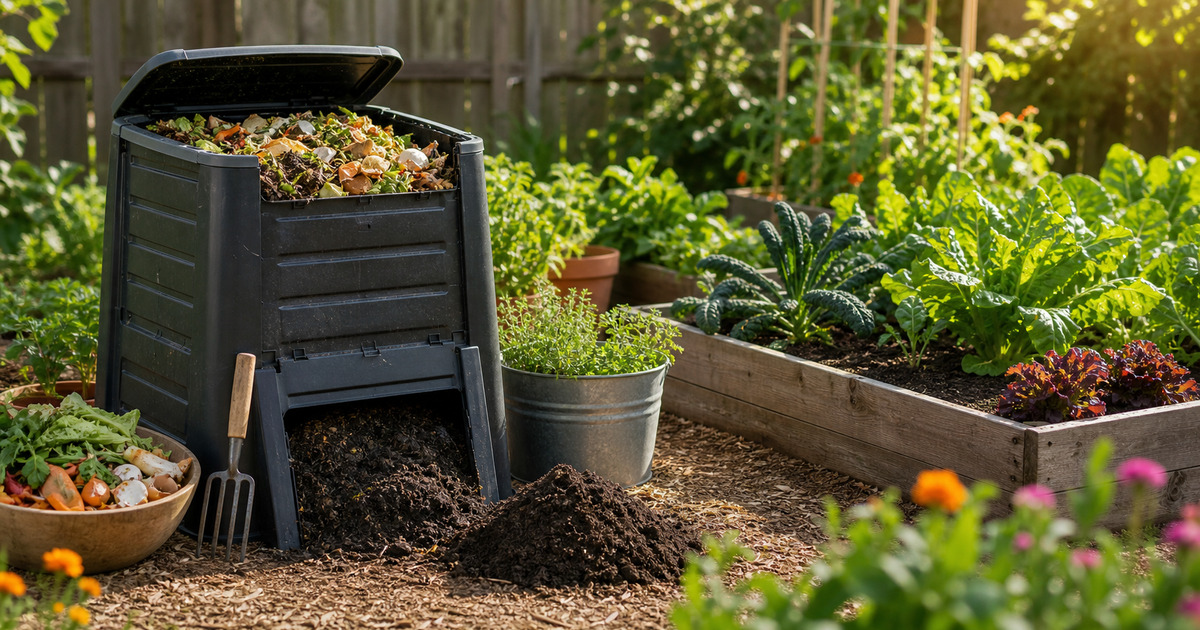
Composting turns everyday kitchen and yard waste into rich, nutrient-dense material that improves soil structure, feeds plants, and reduces what goes to the landfill. It sounds technical, but a functional home compost system requires little more than the right mix of materials and a bit of patience.
Why Compost?
Composting reduces household waste, cuts down on synthetic fertilizer use, and builds healthier soil over time by improving water retention, aeration, and microbial activity. For gardeners, finished compost is one of the most valuable — and free — soil amendments available.
Greens vs. Browns: The Core Composting Formula
Composting works by balancing nitrogen-rich "greens" with carbon-rich "browns." A rough target ratio is 1 part greens to 2–3 parts browns by volume.
| Category | Examples |
|---|---|
| Greens (nitrogen) | Vegetable scraps, fruit peels, coffee grounds, grass clippings |
| Browns (carbon) | Dry leaves, cardboard, straw, shredded newspaper, wood chips |
| Avoid | Meat, dairy, oily foods, pet waste, diseased plants |
Choosing a Composting Method
- Backyard pile or bin: Best for homeowners with outdoor space; produces compost in 2–6 months with regular turning.
- Tumbler composter: Faster decomposition and easier turning, ideal for smaller yards.
- Vermicomposting (worm bins): Compact and odor-free, well suited to apartments and indoor use.
- Municipal/community composting: A good option for renters or apartment dwellers without outdoor space.
Step-by-Step: Building Your First Compost Pile
- Choose a level, well-draining spot with partial shade.
- Start with a coarse layer of twigs or straw for airflow.
- Alternate layers of greens and browns, roughly following the 1:2–3 ratio.
- Keep the pile as moist as a wrung-out sponge — not soggy, not bone dry.
- Turn the pile every 1–2 weeks to add oxygen and speed decomposition.
- Compost is ready when it's dark, crumbly, and smells earthy, with no recognizable food scraps.
Troubleshooting Common Compost Problems
| Problem | Likely Cause | Fix |
|---|---|---|
| Bad smell | Too many greens, not enough air | Add browns, turn the pile |
| Pile isn't heating up | Too dry or too small | Add water, add more material |
| Attracting pests | Meat/dairy added, or exposed food scraps | Bury scraps, remove animal products |
| Soggy, slimy pile | Too wet, poor drainage | Add dry browns, improve drainage |
Key Takeaways
- Balance nitrogen-rich greens with carbon-rich browns at roughly a 1:2–3 ratio.
- Never compost meat, dairy, oily foods, or pet waste in a standard home pile.
- Regular turning and proper moisture are the two biggest factors in fast, odor-free composting.
- Finished compost is dark, crumbly, and smells like earth, not rot.
FAQ
How long does composting take? A well-maintained backyard pile typically finishes in 2–6 months; tumbler composters can be faster, while cold/passive piles may take up to a year.
Can I compost in an apartment? Yes — vermicomposting (worm bins) and countertop electric composters work well in small spaces without outdoor access.
Do I need to turn my compost pile? Turning speeds decomposition and prevents odor by adding oxygen, but "cold composting" without turning also works — it just takes longer.
Can citrus peels and onions go in compost? Yes, in moderate amounts. They're sometimes avoided in large quantities because they can slow down worm activity in vermicompost bins specifically.
Suggested Related Articles
- Understanding Soil pH: Why It Matters and How to Test It
- How to Start a Vegetable Garden: The Complete Beginner's Guide
- Raised Bed Gardening: Complete Setup Guide for Beginners
- Organic Pest Control: Natural Solutions for Common Garden Pests
Internal Linking Suggestions
- Link "soil structure" to the soil pH testing guide
- Link "raised bed" to the raised bed gardening guide
- Link "vermicomposting" to a future dedicated worm-bin tutorial
AI Image Generation Prompt
Close-up of hands turning dark, crumbly finished compost with a garden fork, a wooden compost bin with visible layers of vegetable scraps and dry leaves in the background, natural outdoor light, photorealistic, earthy tones, shallow depth of field, editorial gardening-magazine style with negative space at the top for text overlay. Do not include any text, logos, or watermarks.
Disclaimer
This article offers general guidance. Composting results vary by climate, materials used, and local regulations — adapt these recommendations to your own environment and check local guidelines on backyard composting where applicable.