Companion Planting Guide: What to Grow Together (and What to Avoid)
September 30, 2026
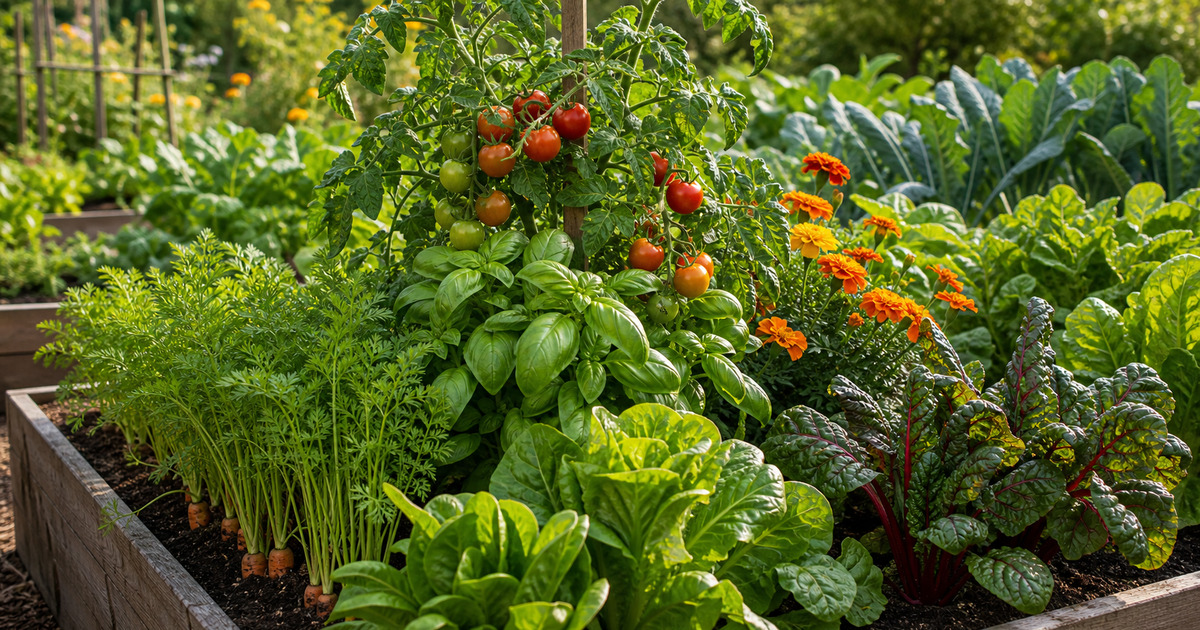
Companion planting is the practice of growing certain plants near each other to improve growth, deter pests, or make better use of garden space. While not every claim about companion planting has strong scientific backing, many pairings are well-supported by generations of gardening practice and some emerging research on plant chemistry and pest behavior.
Why Companion Planting Works
Companion planting can help gardens in several practical ways: some plants repel specific pests through scent, others attract beneficial predatory insects, some improve soil fertility (like nitrogen-fixing legumes), and others simply make efficient use of space and light by growing at different heights or rates.
Classic Companion Planting Pairings
| Plant | Good Companions | Why It Works |
|---|---|---|
| Tomatoes | Basil, marigold, carrots | Basil may repel pests; marigold deters nematodes |
| Corn | Beans, squash ("Three Sisters") | Beans fix nitrogen; squash shades soil, suppresses weeds |
| Cucumbers | Beans, radishes, dill | Beans add nitrogen; radishes deter cucumber beetles |
| Carrots | Onions, leeks | Onion family may deter carrot fly |
| Lettuce | Chives, radishes | Fast-growing companions make efficient use of space |
| Roses | Garlic, chives | May help deter aphids |
Combinations to Avoid
| Plant | Avoid Pairing With | Why |
|---|---|---|
| Tomatoes | Corn, potatoes | Shared pests and diseases (e.g., blight) |
| Beans | Onions, garlic | Alliums can inhibit bean growth |
| Carrots | Dill (mature) | Mature dill can inhibit carrot development |
| Potatoes | Tomatoes, squash | Increased risk of shared blight |
The "Three Sisters" Method
One of the best-documented companion planting systems, developed by Indigenous agricultural traditions in North America, pairs corn, climbing beans, and squash: corn provides a structure for beans to climb, beans fix nitrogen in the soil to benefit all three, and squash's broad leaves shade the soil, suppressing weeds and retaining moisture.
How to Apply Companion Planting in a Small Garden
- Start with 2–3 well-documented pairings rather than trying to plan an entire garden around companion charts.
- Group plants with similar water and light needs regardless of companion benefits.
- Use fast-growing companions (like radishes) between slower-growing crops to make efficient use of space.
- Track results season to season — companion planting outcomes can vary by climate and soil.
Common Misconceptions
Not every companion planting claim is backed by strong scientific evidence — some pairings are based on tradition and anecdotal observation rather than controlled studies. Companion planting should be treated as one useful tool among many, not a replacement for good soil health, proper spacing, and pest monitoring.
Key Takeaways
- Companion planting can help with pest deterrence, pollination, nitrogen fixation, and space efficiency.
- The "Three Sisters" method (corn, beans, squash) is one of the most well-established companion systems.
- Avoid pairing tomatoes and potatoes, which share vulnerability to blight.
- Treat companion planting as a helpful complement to good soil health and pest monitoring, not a substitute.
FAQ
Is companion planting scientifically proven? Some pairings, like nitrogen-fixing legumes benefiting neighboring plants, are well-supported by soil science; others are based more on tradition and observation, with mixed or limited formal research.
Can I companion plant in containers? Yes — compatible pairings like basil and tomatoes, or lettuce and chives, work well in larger containers as long as both plants' light and water needs are similar.
Do marigolds really repel pests? Marigolds are commonly used to deter certain nematodes and some insects, and while results vary, they're a low-risk, low-cost addition to most vegetable gardens.
How many companion plants should a beginner start with? Start with two or three simple, well-documented pairings rather than trying to plan an entire garden layout around companion planting charts.
Suggested Related Articles
- How to Start a Vegetable Garden: The Complete Beginner's Guide
- Organic Pest Control: Natural Solutions for Common Garden Pests
- Pollinator Gardens 101: Attracting Bees, Butterflies, and Birds
- Understanding Soil pH: Why It Matters and How to Test It
Internal Linking Suggestions
- Link "nitrogen-fixing" to the soil pH and soil health guide
- Link "pest deterrence" to the organic pest control guide
- Link "Three Sisters" to a future Indigenous agricultural practices article
AI Image Generation Prompt
A thriving vegetable garden bed showing the Three Sisters planting method — tall corn stalks with climbing bean vines wrapped around them, and broad squash leaves covering the soil below, bright midday sun, photorealistic, vibrant greens, wide shot with shallow depth of field, editorial gardening-magazine style with negative space at the top for text overlay. Do not include any text, logos, or watermarks.
Disclaimer
This article offers general guidance. Companion planting results vary by climate, soil, and plant variety — adapt these recommendations to your own growing conditions and observe results over multiple seasons.