AgTech Startups to Watch: Innovations Shaping the Future of Growing (2026)
July 22, 2026
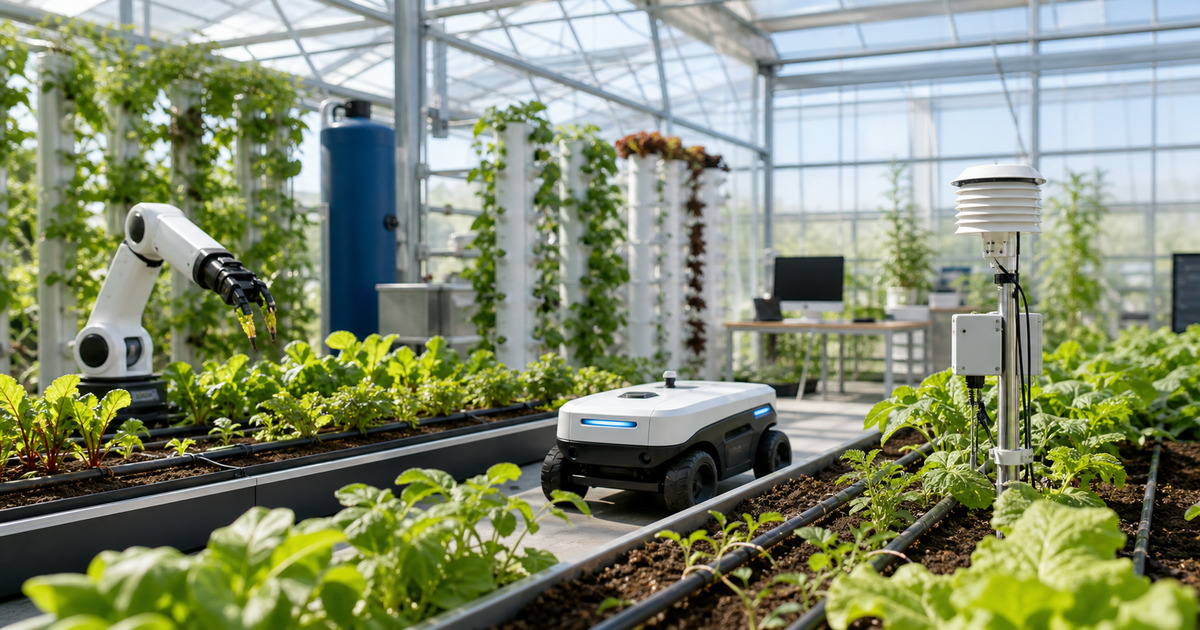
Agricultural technology, or AgTech, has moved well beyond large-scale commercial farming equipment. In 2026, the innovations reshaping how food is grown span everything from AI-powered plant diagnostics in consumer apps to autonomous robotics in commercial greenhouses. This trend overview covers the categories of AgTech innovation most relevant to gardeners, urban farmers, and technology enthusiasts watching the space.
Why AgTech Matters Beyond Commercial Farming
While terms like AgTech often bring to mind large-scale commercial agriculture, many of the same underlying technologies — computer vision, sensor networks, and machine learning — are increasingly built into consumer-facing tools for home gardeners, urban farms, and community growing projects.
Key AgTech Categories to Watch
AI Plant Diagnostics and Identification
Computer vision models trained on massive plant image datasets can now identify species and diagnose common diseases from a single smartphone photo with increasing accuracy. This category has moved from novelty apps to genuinely useful diagnostic tools that flag issues before they spread.
Precision and Automated Irrigation
Sensor-driven irrigation systems that combine soil data, hyperlocal weather forecasting, and plant-specific water needs are reducing water waste at both commercial and residential scales, an increasingly important capability as drought conditions affect more regions.
Vertical and Controlled Environment Agriculture (CEA)
Indoor vertical farming operations, using stacked growing layers under optimized LED lighting, continue to expand as a way to grow food closer to urban populations with a fraction of the land and water footprint of traditional agriculture — while smaller-scale versions of the same technology are reaching home kitchens.
Agricultural Robotics
Autonomous or semi-autonomous robots for weeding, harvesting, and crop monitoring are reducing labor dependency in commercial operations, with early consumer analogs appearing in robotic lawn and garden maintenance tools.
Biotech and Soil Science Innovation
Advances in soil microbiome research and biological (rather than purely chemical) fertilizers and pest solutions are creating new categories of regenerative, lower-impact agricultural inputs for both commercial farms and home gardens.
AgTech Category Comparison
| Category | Primary Value | Consumer Relevance in 2026 |
|---|---|---|
| AI plant diagnostics | Faster, more accurate issue detection | High — widely available in apps |
| Precision irrigation | Reduced water waste | Moderate–high — growing home adoption |
| Vertical/CEA farming | Higher yield per square foot | Moderate — scaled-down home systems emerging |
| Agricultural robotics | Reduced manual labor | Low–moderate — mostly commercial, some consumer crossover |
| Soil/biotech innovation | Healthier, more resilient soil | Moderate — new biological products reaching garden centers |
What This Means for Home Gardeners
Home gardeners don't need to adopt every AgTech innovation to benefit from the space. Many consumer tools — plant ID apps, smart soil sensors, and app-connected irrigation timers — are directly descended from commercial AgTech research, made accessible and affordable for everyday growing.
Key Takeaways
- AgTech innovation spans AI diagnostics, precision irrigation, vertical farming, robotics, and soil biotechnology.
- Many commercial AgTech technologies are trickling down into affordable consumer tools for home gardeners.
- AI plant diagnostic apps are currently the most accessible and widely adopted AgTech category for everyday gardeners.
- Vertical and controlled-environment farming continues to expand as a land- and water-efficient way to grow food near cities.
FAQ
Is AgTech only relevant to large commercial farms? No — while much AgTech research originates in commercial agriculture, many resulting tools, like AI plant ID apps and smart irrigation controllers, are built specifically for home and hobby gardeners.
What is controlled environment agriculture (CEA)? CEA refers to growing crops in an environment where factors like light, temperature, and humidity are actively managed, ranging from small indoor hydroponic setups to large commercial vertical farms.
Are agricultural robots available for home gardens? Fully autonomous garden robots remain limited mostly to lawn maintenance, though the underlying technology from commercial agricultural robotics increasingly informs consumer smart-garden devices.
How can I follow AgTech developments relevant to home gardening? Following gardening technology publications, AgTech-focused industry news, and reviewing new product categories at gardening trade shows are good ways to track developments relevant to consumer use.
Suggested Related Articles
- Smart Gardening for Beginners: How AI Tools and Sensors Are Changing Home Growing in 2026
- Hydroponics for Beginners: How Soil-Free Growing Works
- Vertical Farming at Home: Growing Up in Small Spaces
- Water-Wise Gardening: Xeriscaping and Drought-Tolerant Design
Internal Linking Suggestions
- Link "smart soil sensors" to the smart gardening for beginners article
- Link "vertical farming" to the vertical farming at home guide
- Link "hydroponics" to the hydroponics for beginners guide
AI Image Generation Prompt
A modern indoor vertical farming facility with stacked rows of leafy greens under soft purple-white LED grow lights, a technician reviewing plant health data on a tablet in the foreground, clean futuristic but grounded aesthetic, photorealistic, editorial technology-magazine style, shallow depth of field with negative space at the top for text overlay. Do not include any text, logos, or watermarks.
Disclaimer
This article reflects general trends in agricultural technology as of 2026 and is intended for informational purposes. Specific product availability, effectiveness, and adoption vary by region and market.